CATEGORY A — Social Companionship & Emotional Support
Engaging in conversation, active listening, and providing emotional support helps reduce feelings of loneliness and isolation. We take time to truly listen, respond with empathy, and create a safe space where you or your loved one can share thoughts, worries, memories, and everyday stories without judgment.
Participating in shared activities such as board games, puzzles, reading together, or watching a favourite TV show brings joy and structure to the day. These simple moments of connection can lift mood, stimulate the mind, and make daily life feel more meaningful and enjoyable. Offering companionship during walks, outings, or appointments provides both emotional reassurance and practical support.
Whether it’s a gentle stroll in the park, a visit to a local café, or attending a community group, we’re there to offer company, conversation, and a steady, caring presence. Providing a consistent, friendly face helps build trust and emotional stability over time.
Regular visits from the same companion can create a sense of routine, familiarity, and comfort, which is especially important for those who may feel anxious, vulnerable, or alone.


Light tidying, such as organising living spaces, dusting, and wiping surfaces, helps keep the home feeling calm, safe, and welcoming. We focus on the areas that matter most to you, making sure everyday spaces are clean and comfortable without disrupting your routines.
Assisting with basic household chores like washing dishes, loading or unloading the dishwasher, and putting items back in their place can make daily life feel more manageable. These small tasks reduce stress and help maintain a sense of order in the home.
Supporting with light laundry tasks, such as sorting clothes, loading the washing machine, hanging items to dry, and folding clean laundry, ensures that clothing and linens stay fresh and ready to use. We work at your pace and respect your preferences for how things are done.
Helping to keep walkways and commonly used areas free from clutter can reduce the risk of trips and falls. By gently maintaining a tidy environment, we support both safety and independence, allowing you or your loved one to move around the home with greater confidence.
CATEGORY B — Domestic Assistance & Housekeeping (Light Tasks)

Meal planning and creating shopping lists together ensures that favourite foods, dietary needs, and personal preferences are all taken into account. We help you think ahead about what you’d like to eat, so meals feel both enjoyable and well-organised.
Assisting with light meal preparation, such as washing and chopping vegetables, preparing simple dishes, or reheating meals, makes it easier to eat regularly and well. We focus on gentle support rather than taking over, encouraging independence wherever possible.
Offering reminders to eat and drink throughout the day can be especially helpful for those who may forget meals or struggle with appetite. We provide kind, respectful prompts that support good nutrition and hydration without pressure or judgment.
Creating a calm, pleasant atmosphere at mealtimes—whether by setting the table, sitting together, or simply being present—can turn eating into a more social and comforting experience. This helps meals feel less like a task and more like a moment of connection.
CATEGORY C — Nutrition & Meal Support

Helping with post, filing, and basic household paperwork keeps important documents organized and easy to find. We can support you in opening letters, sorting them into simple categories, and safely storing anything that needs to be kept.
Assisting with simple forms, such as basic applications or appointment letters, can reduce stress and confusion. We sit alongside you, read through information together, and help you understand what is being asked, always at your pace.
Providing gentle reminders for appointments, important dates, or tasks helps you stay on top of everyday life. Whether it’s a medical visit, a social engagement, or a renewal deadline, we can help you keep track in a calm and supportive way.
Supporting the creation of simple routines, such as weekly to-do lists or calendars, can bring structure and peace of mind. By breaking tasks into manageable steps, we help life feel more organised and less overwhelming.
CATEGORY D — Administrative Support & Life Management

Assisting with light pet duties, such as walking, feeding, or refreshing water bowls, helps ensure that beloved pets remain happy, healthy, and well cared for. We understand how important animals are to emotional wellbeing and treat them with kindness and respect.
Helping with basic grooming tasks, like brushing fur or wiping paws after a walk, keeps pets comfortable and the home cleaner. These small acts of care can also be a lovely way to bond with the animal and bring joy to the day.
Supporting you in maintaining regular routines for your pet—such as feeding times, short walks, or play sessions—can reduce stress for both you and your companion animal. Consistent routines help pets feel secure and make daily life more predictable.
Offering companionship during vet visits or pet-related errands provides reassurance and practical help. We can accompany you to appointments, help carry items, and be there as a calm, supportive presence throughout.
CATEGORY E — Pet Care Assistance

Providing help to engage with specific hobbies, such as arts and crafts, gardening, music, or reading, keeps personal interests alive and meaningful. We encourage you to continue doing the things you love, adapting activities to your comfort and ability.
Assisting with setting up materials, organising supplies, or tidying up afterwards makes it easier to start and enjoy hobbies without feeling overwhelmed by the practical side. This allows you to focus on the pleasure and creativity of the activity itself.
Joining in with hobbies—whether that’s playing a game, listening to music together, or working on a project side by side—turns solitary activities into shared experiences. This can boost mood, reduce loneliness, and create positive memories.
Encouraging gentle exploration of new interests, at your own pace, can bring fresh enjoyment and a sense of achievement. We support you in trying small, manageable activities that feel safe, fun, and personally meaningful.
CATEGORY F — Hobbies & Special Interests Support
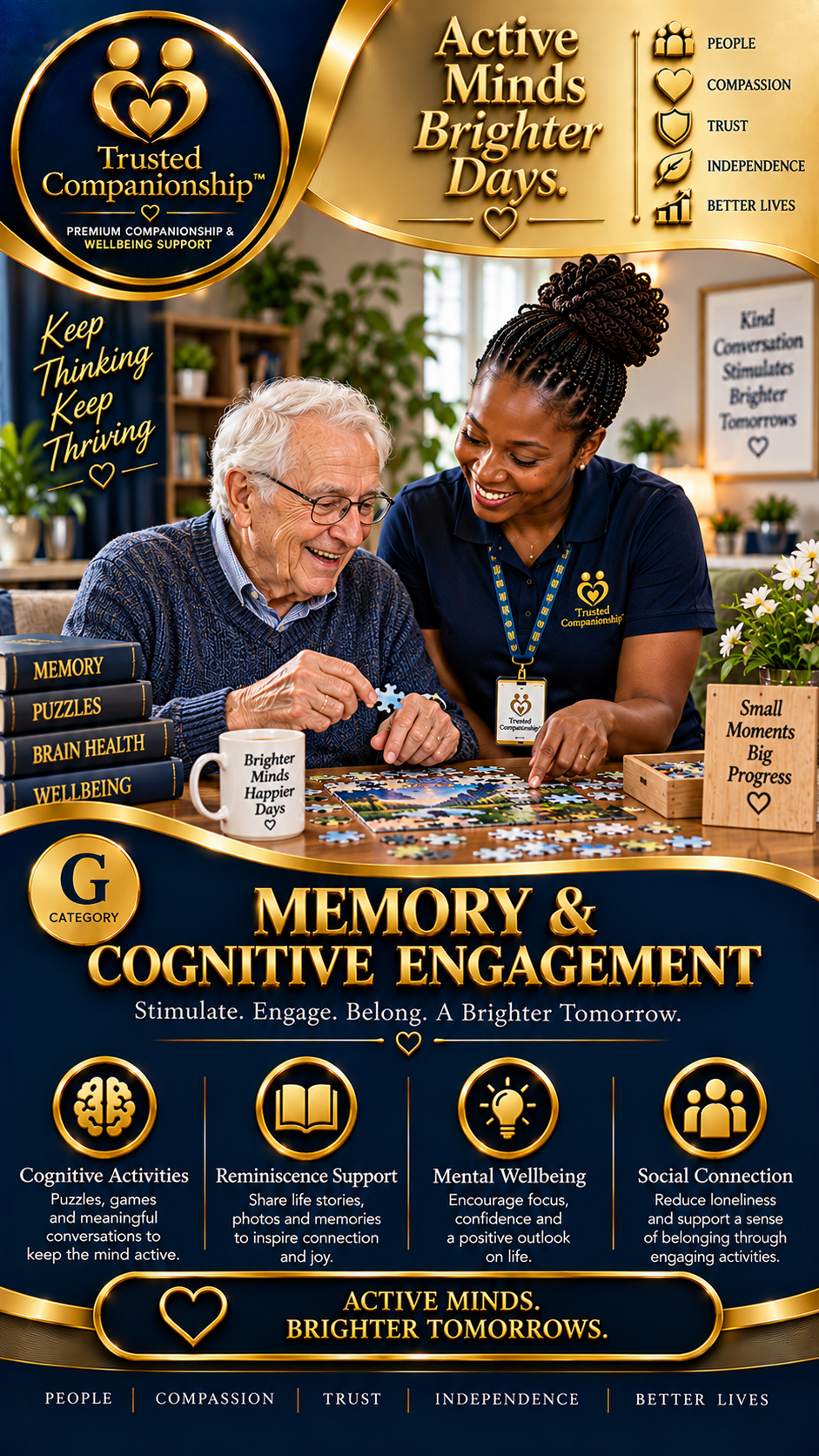
CATEGORY G — Memory & Cognitive Engagement
Developing and engaging in reminiscence activities, such as looking through photo albums or talking about past experiences, can stimulate memory and provide comfort.
These conversations honour personal history and help maintain a sense of identity. Using simple memory games, puzzles, or word activities can gently exercise the mind in a relaxed, enjoyable way. We choose activities that feel appropriate and supportive, never stressful or demanding.
Offering calm, patient conversation that allows time to think and respond helps reduce frustration and anxiety. We adapt our pace to yours, giving space for thoughts to form and memories to surface naturally.
Creating small, familiar routines—like a regular time for a favourite activity or a daily chat—can provide structure and reassurance. These patterns support cognitive wellbeing and help each day feel more predictable and secure.
CATEGORY H — Respite Support for Primary Carers

Providing reliable companionship to allow primary carers time away offers much-needed rest and breathing space. While we spend time with your loved one, carers can step out knowing that someone kind and attentive is present.
Engaging the person in gentle conversation, activities, or quiet company helps them feel safe and supported while their main carer is taking a break. We focus on comfort, reassurance, and maintaining familiar routines.
Following agreed care preferences and daily patterns ensures continuity and respect for the person’s needs. We work closely with primary carers to understand what feels right, from favourite drinks to preferred activities.
Offering flexible respite—whether for a short outing, a regular weekly break, or occasional support—can help carers look after their own wellbeing. This balance supports the whole family and helps care remain sustainable over time.
CATEGORY I — Bereavement & Transition Support
Offering dedicated companionship during periods of loss or major life change provides a gentle, steady presence when things feel uncertain. We are there to listen, sit quietly, or simply be alongside you, depending on what you need.
Creating space for conversation about memories, feelings, and worries can help process grief and change. We listen without rushing or judging, allowing you to share as much or as little as feels comfortable.
Supporting with small, practical tasks—such as light tidying, simple errands, or organising everyday items—can ease the burden when energy and focus are low. These acts of help make daily life feel a little more manageable.
Encouraging gentle routines and small moments of self-care, like a short walk or a cup of tea together, can bring comfort and stability. Over time, these small steps can support emotional healing and adjustment.

CATEGORY J — Hospital Discharge & Home Settlement
Assisting with light tasks to prepare the home for a return from hospital helps create a safe, welcoming environment. This might include simple tidying, making space for mobility aids, or ensuring key items are easy to reach.
Being present on or shortly after the day of discharge can provide reassurance and practical support. We can help you settle in, make a drink, or organize personal items so that you feel more comfortable and less overwhelmed.
Offering gentle companionship in the days following discharge supports emotional wellbeing during a vulnerable time. We are there to listen, keep you company, and help you adjust back to home life at a calm, steady pace.
Providing light assistance with everyday routines—such as simple meal support, reminders, or short walks around the home—can aid recovery and help rebuild confidence after a hospital stay.

CATEGORY K — Transportation & Errand Running

Accompanying clients to local shops, pharmacies, or community locations offers both practical help and emotional reassurance. We stay by your side, help carry items, and make sure you feel supported throughout the outing.
Supporting with transport to appointments, social visits, or local activities helps maintain independence and connection to the community. Whether by walking with you, travelling together, or meeting you there, we aim to make getting out feel easier and safer.
- Helping to plan simple routes and timings for errands can reduce stress and confusion. We work with you to decide what needs to be done, in what order, and at a pace that feels comfortable.
- Assisting with putting away shopping or organizing items once you return home ensures that errands feel fully completed. This gentle support helps you enjoy the benefits of the trip without feeling exhausted by the practical details.